ServicesPhysical Damage Insurance
Physical Damage Insurance in College Park
Physical damage coverage pays to repair or replace your own truck and trailer after a wreck, fire, theft or storm. Before we quote anything, we look at what you run, what it is worth today and what your lender requires. Then we tell you plainly what we found.
What physical damage coverage does for you
Liability pays for damage you cause to other people. It pays nothing toward your own truck. Physical damage is the part of a trucking policy that covers your equipment. Collision handles wrecks, rollovers and backing into a dock. Comprehensive handles the rest: fire, theft, vandalism, hail, falling objects and flood.
Most claims on this coverage are settled on the stated value you put on the policy. Set it too high and you pay premium on money you will never collect. Set it too low and a total loss leaves you short on the truck payment. That number is where we start.
We have been doing this for 5 years, and we are licensed for property and casualty insurance. Our job is to get the numbers right before you sign, not after a claim.
What we look at and set up
- Collision coverage
- Pays to fix or replace your truck after it hits another vehicle or an object, or rolls over. It applies no matter who was at fault, minus your deductible.
- Comprehensive coverage
- Covers losses that are not a crash. Theft, fire, vandalism, hail and glass damage fall here. Some owners skip it on older units, and we will tell you when that makes sense.
- Stated value review
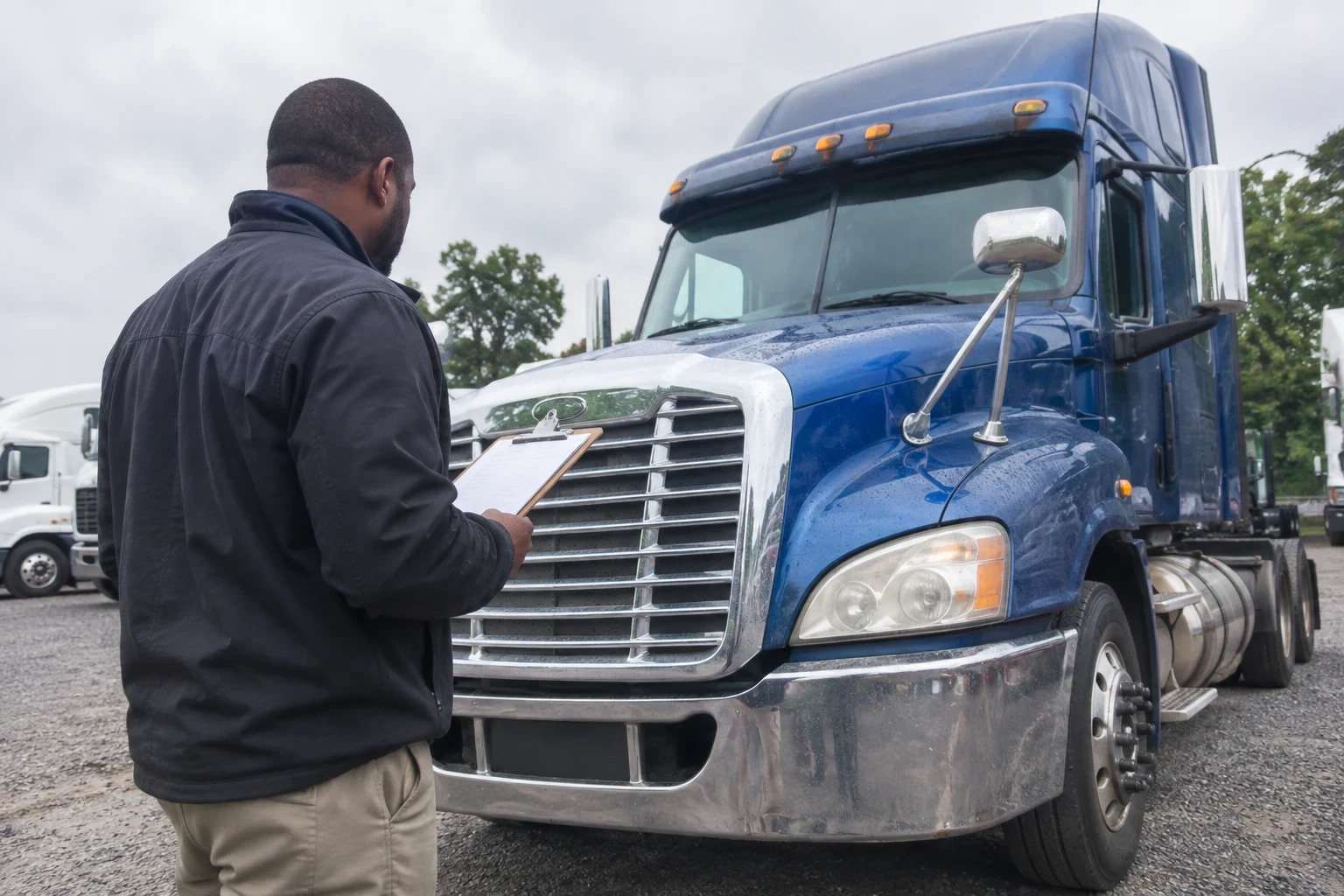
- We look at the year, make, mileage and condition of each tractor and trailer. Then we compare that to what similar units sell for. You see the reasoning before we set a number.
- Deductible choices
- A higher deductible lowers your premium but means more cash out of pocket after a loss. We show you a couple of options side by side so you can pick one you could actually pay.
- Lienholder and lease paperwork
- If a bank or leasing company has an interest in your truck, we list them correctly and send the certificate of insurance they ask for.
- Trailers, owned or not
- Your own trailers can be scheduled on the policy. Trailers you pull under someone else's agreement usually need trailer interchange insurance instead, and we will point out which applies.
Signs it is time to look at your physical damage coverage
You bought or financed a truck
Lenders almost always require collision and comprehensive with them listed as loss payee. The truck should not leave the lot without it.
Your stated value has not changed in years
Trucks lose value over time. If the number on your policy was set when the truck was new, you may be overpaying.
Your truck is paid off
With no lender in the picture, you choose how much coverage to carry. It is a good time to recheck the value and the deductible.
You added equipment
A new trailer, a sleeper upgrade or added aftermarket parts can change what the unit is worth. If they are not listed, they may not be paid for.
Your carrier lease does not cover it
Leased owner-operators often assume the motor carrier covers their truck. Usually it does not. Check your lease and ask us to read it with you.
What moves the price of physical damage coverage
Physical damage premium is mostly driven by how much the insurance company could have to pay out. A few things raise or lower that number. We will show you which ones apply to your operation.
Stated value
The higher the value on each truck and trailer, the higher the premium. That is why getting the value right matters so much.
Deductible
Raising your deductible lowers the premium. The trade-off is more cash out of pocket on each claim.
Type of truck and use
A dump truck on job sites, a hotshot rig running long miles and a box truck making local runs all carry different risks. Where and how far you drive matters too.
Driver record and experience
Years behind the wheel and a clean MVR help. Recent accidents or violations push the rate up.
Loss history
Past claims on your trucks, especially theft or repeat collisions, affect what insurers will charge.
How we work through it
- 1
Talk it through
We meet by phone, video or at our office. Bring your truck details, VINs, any loan or lease paperwork and your current policy if you have one.
- 2
Check the equipment and the paperwork
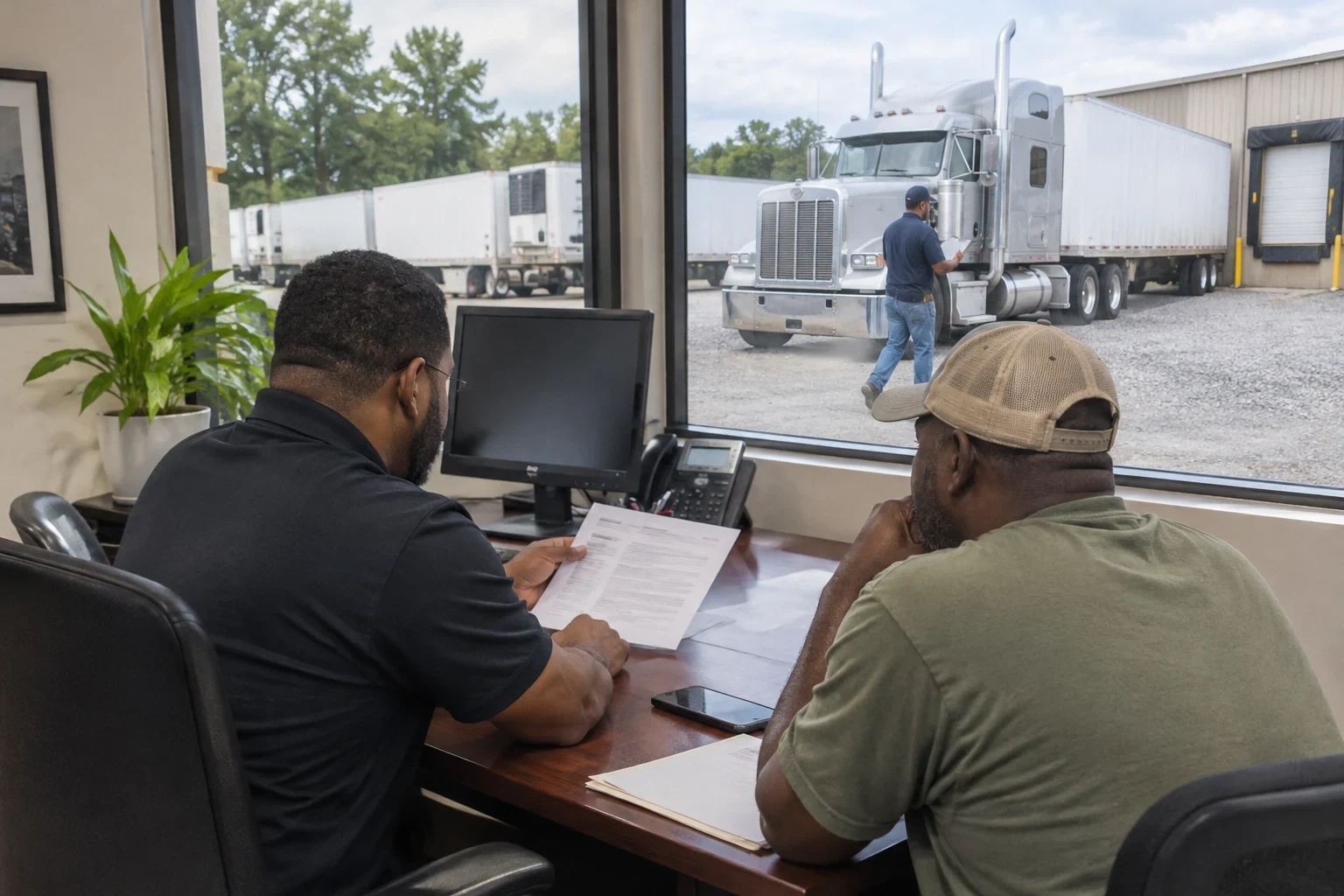
We go unit by unit. We look at age, condition, mileage and what you owe. We read your current declarations page and your lease for gaps.
- 3
Share what we found
You get plain findings first: where values look off, where a deductible seems high or where coverage is missing. No recommendation until you have seen that.
- 4
Quote and bind
We quote the coverage that fits and explain each line. Once you decide, we bind it and send certificates to your lender or carrier.
Physical damage questions we hear often
Is physical damage insurance required by law?
No. Federal and state filings require liability, not coverage on your own truck. But if your truck is financed or leased, your lender will almost always require it. If you own it outright, it is your call, and we will help you weigh it.
What is stated value and how is it set?
It is the dollar amount you put on each truck or trailer on the policy. After a total loss, the insurer generally pays the lesser of the stated value or the actual cash value. That is why we check the number against what similar units really sell for.
Does my motor carrier's policy cover my truck while I am leased on?
Usually not. Most carriers cover liability and sometimes cargo, but the truck itself is your responsibility. We will read your lease agreement with you to see exactly what it says.
Does physical damage cover hail and storm damage?
Yes, if you carry comprehensive. Collision alone does not cover hail, falling trees or flooding. Georgia gets its share of spring storms, so we usually suggest owners at least look at the comprehensive numbers.
Can I add towing or rental coverage?
Many insurers offer towing and rental or downtime options as add-ons. Whether they are worth it depends on your truck and how you run. We will tell you what is available on your quote and what it adds.
Get the value on your truck right
Have your VINs and current policy handy. We will go through your equipment with you, tell you what we see and then quote the coverage.