
ServicesNew Authority Truck Insurance
New Authority Truck Insurance in College Park
Your MC authority can't go active until an insurer files proof of liability coverage. We look over your experience, your truck and your freight first, tell you plainly what an underwriter will see, then line up the coverage and filings you need to start hauling.
What new authority coverage is and why it's different
New authority truck insurance is the coverage a motor carrier carries in its first years under its own DOT number and MC authority. The FMCSA won't turn on your authority until an insurer files proof of liability for you. Brokers and shippers will also want a certificate of insurance before they hand you a load.
The hard part is that insurers have no history on you. No loss runs, no years under your own name. So they lean on what they can see: your driving record, how long you've held a CDL, the truck, the freight and how far you plan to run. We go through those same things with you before we recommend anything. You hear what helps you and what will cost you, in plain words.
We've been in business 5 years and we're licensed for property and casualty insurance. We work with new carriers at our office or by phone and video.
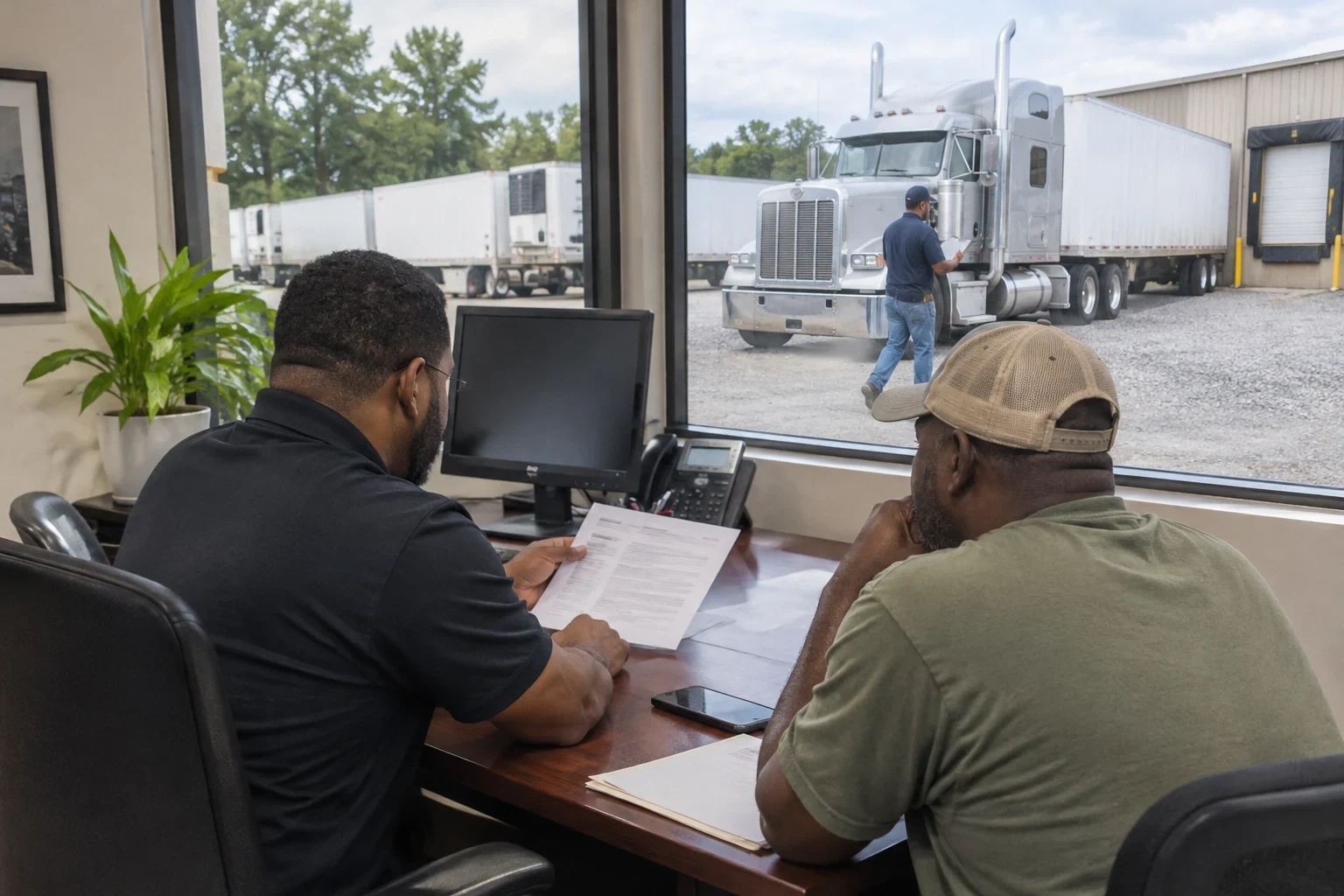
What we set up for a new carrier
- 01
Primary liability and the federal filing
We place your primary auto liability and make sure the insurer files the right form with FMCSA. That filing is what lets your authority go active. A wrong name or DOT number on it can hold you up for weeks, so we check it before it goes in.
- 02
Cargo coverage matched to your freight
Federal rules don't require cargo coverage for most general freight, but nearly every broker does. We set a limit that fits what you actually haul and the brokers you plan to work with. Our Motor Truck Cargo Insurance page has more detail.
- 03
Physical damage on your truck
If the truck is financed, the lender will require it. If it's paid off, we talk through whether the truck's value makes it worth carrying.
- 04
Add-ons only when they fit
Trailer interchange makes sense if you'll pull other companies' trailers under an interchange agreement. If you won't, we leave it off.
- 05
Certificates of insurance
As you sign on with brokers and shippers, we send out certificates of insurance with the right names and limits on them.
Questions about New Authority Truck Insurance?
Call(404) 236-6408Signs it's time to set up new authority coverage
Your MC application is waiting on insurance
You've applied for authority and the FMCSA status shows it's pending an insurance filing. Nothing moves until that filing is in.
You're leaving a lease
You've been running under another carrier's authority and want your own. Coverage needs to start the day you go out on your own, not a week later.
A broker asked for a certificate you don't have
Load boards and broker setups want a certificate of insurance showing liability and cargo. Without one, you can't book the load.
You bought a truck under a new company
A new business name and a new DOT number usually means a new policy, even if you've driven for years.
Your old filing was canceled
If a past policy lapsed and your authority was pulled, you'll need a new filing to get it reinstated. We'll go over what happened and what insurers will ask about it.
How we get a new carrier covered
- 1
The first conversation
We ask for your DOT and MC numbers, CDL history, the truck and trailer, what you haul and your usual radius. It takes some time, and every answer changes the quote.
- 2
A plain look at your file
We pull together what an underwriter will see, like your driving record and prior experience. Then we tell you straight what helps and what hurts, before any quote.
- 3
Quotes laid out side by side
We show you each option line by line: limits, deductibles, down payment, monthly payment and what's excluded. You pick. We don't push the biggest policy.
- 4
Binding and filings
Once you choose, the coverage is bound and the insurer files with FMCSA. We confirm the filing shows up and get your first certificates out to brokers.
- 5
A check-in before renewal
Your first clean year matters a lot. Before renewal we look at your record again and shop it if that makes sense.
What moves the price of new authority coverage
Premiums for a new authority run higher than for an established carrier, mostly because there's no track record under your own DOT number. That doesn't mean every new carrier pays the same. These are the things that move the number most.
- Driving experience and record
- Years with a CDL and a clean MVR do more for your premium than anything else. Recent tickets or accidents narrow the list of insurers willing to write you.
- What you haul and how far
- General dry freight costs less to insure than hazmat, high-value loads or refrigerated freight. Long-haul radius usually costs more than local runs.
- The truck and its value
- An older truck may cost less for physical damage but can raise other questions with underwriters. A new financed truck brings lender requirements.
- Limits and deductibles
- Higher liability and cargo limits cost more, but some brokers won't load you without them. A higher deductible can lower the premium if you can cover it.
- Where the truck is garaged
- Insurers look at where the truck sits overnight. Busy metro Atlanta corridors are rated differently than rural areas.
New authority questions we hear
How soon will my authority go active once my coverage is bound?
The insurer sends the filing after the policy is bound. FMCSA then has to process it, and any waiting period on your application has to pass. We can't speed up the FMCSA side, but we can make sure the filing goes in correctly the first time.
Why is my first-year premium so much higher than what I heard from other drivers?
Drivers with a few years under their own authority have loss history to show. You don't yet. A clean first year is what brings it down, and we review it with you at renewal.
Can I get coverage with less than two years of CDL experience?
Sometimes, but fewer insurers will write it and the price is higher. We'll tell you plainly where you stand after we look at your record, instead of giving you false hope.
Do I really need cargo coverage?
For most general freight, the FMCSA doesn't require a cargo filing. Brokers and shippers almost always do, so in practice you'll need it to get loads.
What happens if I miss a payment?
If the policy cancels, the insurer files a cancellation with FMCSA and your authority can be revoked. If money is tight, talk to us before the due date so we can look at your options.
I'm leased on now. When should I start this?
Start before your lease ends so coverage begins the day you go on your own. Your non-trucking liability from the lease won't cover you under your own authority. Our Non-Trucking Liability (Bobtail) Insurance page explains the difference.

Starting under your own MC number
Bring your DOT number, CDL history and truck details. We'll go through your file with you, tell you what we see, and lay out the coverage that gets your authority active.